If your child brushes twice a day but still keeps getting cavities, the problem usually is not the toothbrush — it is the snack drawer. Pediatric tooth decay is the single most common chronic condition of childhood, more common than asthma or seasonal allergies, and diet is the biggest driver behind it. Understanding the foods that cause tooth decay in children is one of the fastest ways parents can protect little smiles without turning every meal into a battle.
At Buckeye Dental & Braces, we see the same handful of culprits show up again and again in the chairs of our youngest patients. The good news? Most of them are easy to swap, limit, or time differently. Below is a complete, parent-friendly guide to what is really attacking your child’s enamel, why it happens, and exactly what to do about it.
First, How Does Tooth Decay Actually Happen?
Cavities are not caused by sugar directly. They are caused by acid. Your child’s mouth naturally hosts bacteria — mainly Streptococcus mutans — that feed on carbohydrates and sugars left behind after eating. As those bacteria digest the sugar, they release acid as a waste product. That acid dissolves the minerals in enamel, and after enough repeated attacks, a soft spot turns into a hole.
Here is the part most parents are never told: every time your child eats or drinks something with sugar or starch, the mouth stays acidic for roughly 20 to 30 minutes afterward. Saliva then slowly neutralizes it and re-mineralizes the enamel. So a child who sips juice for two hours is under acid attack far longer than a child who drinks the same juice in five minutes.
Children’s teeth are also more vulnerable than adult teeth. Baby tooth enamel is about half as thick, newly erupted permanent molars have deep grooves that trap food, and most kids under eight simply do not brush well enough to clear the sticky residue on their own. That combination makes childhood the highest-risk window of a person’s entire life.
The Top Foods That Cause Tooth Decay in Children
Ranked roughly by how much damage they do in a typical American household.
1. Sticky and Chewy Candies
Gummy bears, taffy, caramels, fruit chews, and gummy vitamins are the worst offenders on this list. They are not just sugary — they physically cling to the grooves of molars and wedge between teeth, where they keep feeding bacteria long after the snack is over. A chocolate bar melts and clears in minutes; a gummy can sit in a molar pit for an hour.
Gummy multivitamins deserve a special mention. Parents give them with the best intentions, often right before bed, which is the worst possible timing. If your child takes one, give it before brushing, never after.
2. Juice, Soda, Sports Drinks, and Flavored Milk
Liquid sugar is the quiet driver of most childhood cavities. A single juice box can hold five to seven teaspoons of sugar, and because it is a drink, it washes over every surface of every tooth — including the smooth front surfaces that rarely decay otherwise.
Sports drinks and sodas add a second problem: they are acidic on their own, with a pH low enough to erode enamel even without bacterial help. Diet soda is not a safe swap for this reason. Sugar-free still means acid-full.
The pattern that does the real harm is sipping. A water bottle filled with juice or a sports drink that a child nurses through a car ride, a practice, or an afternoon of homework creates a nearly continuous acid bath.
3. Crackers, Chips, Pretzels, and Refined Starches
This one surprises parents the most. Goldfish crackers, saltines, potato chips, pretzels, and white bread are not sweet, but salivary enzymes begin converting those refined starches into simple sugars within seconds of chewing. The paste that results packs into the chewing surfaces of molars and behaves almost exactly like candy.
Because they read as “not dessert,” starchy snacks are often given freely and frequently — which makes their total impact on enamel larger than the occasional cupcake.
4. Dried Fruit and Fruit Snacks
Raisins, dried mango, fruit leather, and fruit-snack pouches carry a health-food halo they have not earned. Drying fruit concentrates its sugar and removes the water that would otherwise help rinse it away, leaving a sticky, sugar-dense paste that behaves like candy on the teeth. Fresh fruit is a far better choice: the water and fiber content help clean as your child chews.
5. Sweetened Cereals and Breakfast Pastries
Many popular children’s cereals are more than one-third sugar by weight, and the flakes and puffs turn to a sticky film as they are chewed. Toaster pastries, muffins, granola bars, and flavored instant oatmeal fall into the same category. Because breakfast is often rushed and brushing frequently happens before eating rather than after, this sugar tends to sit on teeth for hours on the school bus.
6. Bedtime Bottles and Overnight Sippy Cups
Putting a baby or toddler to bed with a bottle of milk, formula, or juice causes a specific, severe pattern of decay that dentists call early childhood caries or “baby bottle tooth decay.” Saliva flow drops dramatically during sleep, so whatever pools around the front teeth stays there all night with no natural defense. The upper front teeth are usually the first to go, sometimes before a child’s second birthday.
Water is the only safe overnight bottle. If your child needs milk to settle, offer it before the bedtime brushing, not after.
7. Sour Candies
Sour gummies and sour powders combine high sugar with citric and malic acid, producing a pH low enough to begin softening enamel on contact. Softened enamel that is then brushed immediately can actually be scrubbed away, so after anything sour, have your child rinse with water and wait about 30 minutes before brushing.
8. All-Day Grazing (The Habit, Not the Food)
The most underrated item on any list of foods that cause tooth decay in children is not a food at all — it is frequency. A child who eats one cookie has one acid attack. A child who eats the same cookie broken into six pieces across an afternoon has six. Frequency of exposure matters more than total quantity, which is why structured snack times protect teeth better than any single dietary rule.
Worried your child may already have a cavity forming? Early decay is painless and almost invisible at home — but it is completely reversible when caught in time. Book an appointment with Buckeye Dental & Braces and let our team take a look before it becomes a filling.
Foods That Actively Protect Your Child’s Teeth
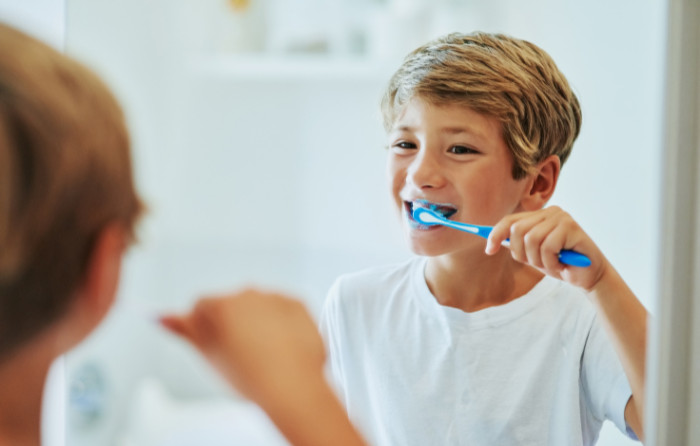
Cavity prevention is not only about removal. Some foods genuinely help rebuild enamel and neutralize acid, and working them into the same snack slot does double duty.
- Cheese, plain yogurt, and milk — rich in calcium, phosphate, and casein, which help re-mineralize softened enamel. A cube of cheese after a sweet treat measurably raises oral pH.
- Crunchy raw vegetables and fruits — carrots, celery, cucumbers, and apples stimulate saliva and mechanically scrub tooth surfaces.
- Nuts and seeds — low in fermentable carbohydrates, high in minerals, and naturally saliva-stimulating. (Age-appropriate forms only for young children.)
- Eggs, fish, and lean meats — supply phosphorus and vitamin D, both essential for mineral uptake into enamel.
- Plain water, ideally fluoridated tap water — rinses debris, dilutes acid, and delivers fluoride directly to the tooth surface.
Smart Swaps That Kids Actually Accept
You do not need to ban anything. In our experience at practices across Northeast Ohio, swap-based changes stick far longer than restriction-based ones.
| Instead of | Try | Why it works |
| Juice box | Whole fruit + water | Fiber and water replace concentrated liquid sugar |
| Gummy snacks | Cheese cubes or yogurt | Calcium re-mineralizes instead of feeding bacteria |
| Goldfish or chips | Whole-grain crackers with hummus | Less sticky starch, more protein and fiber |
| Sports drink | Water with fruit slices | Removes both the sugar and the acid |
| Raisins | Fresh grapes or apple slices | Water content rinses rather than clings |
| Sweetened cereal | Plain oats with cinnamon and berries | Cuts added sugar dramatically at breakfast |
It Is Not Only What They Eat — It Is How and When
Two children can eat the exact same amount of sugar in a week and have completely different cavity outcomes. The difference is almost always timing and habits.
- Contain sweets to mealtimes. Saliva production peaks during a full meal, so the same candy does less damage as dessert than as a 3 p.m. standalone snack.
- Set two or three defined snack windows instead of an open kitchen. Fewer acid attacks per day is the single most powerful change most families can make.
- Rinse with water right after anything sugary or sour when brushing is not possible.
- Brush for two full minutes, twice daily, with a fluoride toothpaste — a rice-grain smear under age three, a pea-sized amount from three to six.
- Supervise brushing until about age eight. Most children lack the fine motor control to clean molars effectively before then.
- Floss once daily as soon as any two teeth touch. Between-teeth cavities are invisible to parents and common in kids.
These habits work best alongside professional care. Routine cleanings, fluoride varnish, and dental sealants on the deep grooves of permanent molars can cut cavity risk substantially. Our preventative dentistry services are designed specifically to catch and stop decay in its earliest, reversible stage, and our family dentistry team can see everyone from toddlers to grandparents in the same visit.
Early Warning Signs of Tooth Decay in Children
Cavities do not hurt until they are deep. Watch for these earlier clues:
- Chalky white spots along the gumline, especially on the upper front teeth — this is demineralization, and it is still reversible
- Brown, gray, or black spots or lines on any tooth surface
- Complaints of sensitivity to cold drinks, ice cream, or sweets
- Chewing only on one side, or refusing previously favorite crunchy foods
- Persistent bad breath that survives brushing
- Visible pitting, a rough edge, or a hole your child keeps touching with their tongue
- Any facial swelling or a bump on the gum — this needs same-day attention
White spots and early sensitivity often respond to fluoride treatment and diet changes alone. Waiting until there is pain usually means a filling, a crown, or in advanced cases the loss of a baby tooth — which can then crowd the permanent teeth coming in behind it.
Due for a checkup? New and returning families can take advantage of our $79 teeth cleaning special — a simple, low-cost way to get your child’s teeth examined, cleaned, and protected before small problems turn into big ones.
What About Crowding, Crooked Teeth, and Decay?
There is a connection parents rarely hear about: crowded or overlapping teeth trap food in places a toothbrush cannot reach, which raises cavity risk in exactly the spots that are hardest to monitor. If your child’s teeth are crowded, rotated, or overlapping, straightening them is a hygiene decision as much as a cosmetic one. Our braces options include modern, comfortable systems for children and teens, and we always build a cleaning strategy into the treatment plan.
Frequently Asked Questions
Which food causes the most cavities in kids?
Sticky candies and gummies cause the most damage per serving because they physically adhere to molar grooves. However, sugary drinks and all-day snacking cause the most cavities overall, simply because children consume them far more often.
Is fruit bad for my child’s teeth?
Fresh whole fruit is fine and even helpful — the water and fiber assist in cleaning. Dried fruit and fruit juice are the problematic forms, because the sugar is concentrated and the cleansing water is gone.
Does milk cause tooth decay?
Plain milk with meals is protective, thanks to its calcium and casein. Milk becomes a problem only when it pools on the teeth overnight in a bottle or sippy cup, or when it is sweetened with chocolate or strawberry flavoring.
At what age should my child first see a dentist?
By the first birthday, or within six months of the first tooth appearing — whichever comes first. Early visits are short, gentle, and mostly about coaching parents and spotting risk before decay starts.
Can a cavity heal on its own?
Early demineralization — the chalky white-spot stage — can re-harden with fluoride, better brushing, and reduced sugar frequency. Once the enamel surface actually breaks and a hole forms, it cannot heal and requires a filling.
How often should kids get dental cleanings?
Every six months for most children, and every three to four months for children with a history of cavities, orthodontic appliances, or high-sugar diets.
The Bottom Line for Parents
The foods that cause tooth decay in children are rarely the ones parents expect. It is not the birthday cake once a year — it is the daily juice box, the handful of crackers at 4 p.m., the gummy vitamin at bedtime, and the raisins packed in every lunchbox because they seemed like the healthy option.
You do not have to eliminate treats. You need to reduce how often teeth are under acid attack, pair sweets with meals, finish with water or cheese, and keep up consistent brushing, flossing, and professional care. Do those five things and you will prevent the overwhelming majority of childhood cavities.
Families throughout Lorain and Cuyahoga counties trust our Avon, Ohio office for gentle, judgment-free pediatric and family care. We will show you exactly which foods that cause tooth decay in children are showing up on your child’s teeth right now, and build a simple plan around your real life — not an impossible ideal.
Ready to protect your child’s smile? Contact Buckeye Dental & Braces today to schedule a visit, ask a question, or get a second opinion. Our team is happy to help you sort through the foods that cause tooth decay in children and find swaps your family will genuinely stick with.
Buckeye Dental & Braces — comprehensive family, preventative, cosmetic, and orthodontic care. View our Google Business Profile.