Losing teeth can change how you eat, speak, and smile. The good news is that modern dentures are more comfortable, natural-looking, and reliable than ever. But before you choose a solution, it helps to understand the difference between full and partial dentures and which one fits your mouth, your lifestyle, and your budget.
At Buckeye Dental & Braces, we meet many patients who are unsure where to start. Some have lost every tooth, while others are missing just a few. This guide explains full and partial dentures in plain language, so you can walk into your appointment informed and confident.
Quick Answer: Full vs. Partial Dentures
The main difference between full and partial dentures is how many teeth they replace. Full dentures (also called complete dentures) replace all of the teeth in the upper jaw, the lower jaw, or both. Partial dentures replace only some missing teeth and attach to your remaining natural teeth for support. If you have no natural teeth left in an arch, you typically need a full denture. If you still have healthy teeth, a partial denture is usually the better fit.
What Are Dentures?
Dentures are removable dental appliances made to replace missing teeth and the surrounding gum tissue. They are custom-made from impressions of your mouth so they match your bite, gum shape, and facial structure. A well-made denture restores your ability to chew, improves speech, supports your cheeks and lips, and brings back a confident smile.
Teeth can be lost because of advanced gum disease, tooth decay, injury, or long-term wear. Whatever the cause, replacing missing teeth matters. Gaps can lead to shifting teeth, bite problems, difficulty chewing, and changes in facial shape. Our team at Buckeye Dental & Braces treats denture care as part of complete oral health, not just a cosmetic fix.
What Are Full Dentures?
A full denture replaces an entire arch of teeth. It has a gum-colored acrylic base that rests on your gums, with a full set of artificial teeth attached. An upper denture usually covers the roof of the mouth for stability, while a lower denture is horseshoe-shaped to make room for the tongue.
Types of Full Dentures
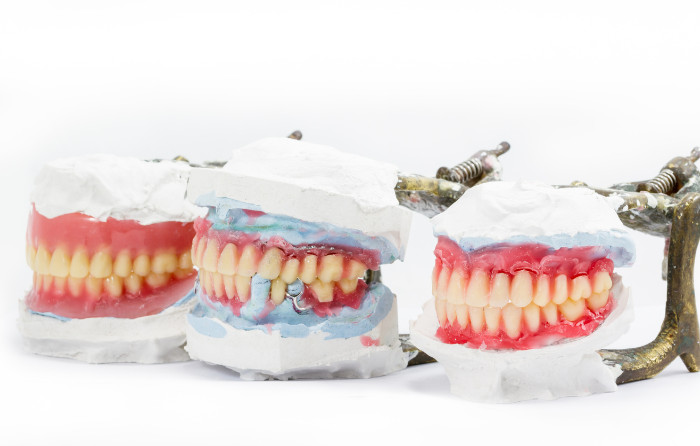
- Conventional full dentures: Made after all remaining teeth are removed and the gums have healed, which can take several weeks to a few months.
- Immediate full dentures: Placed on the same day your teeth are removed, so you are never without teeth. They usually need more adjustments as your gums heal and shrink.
- Implant-supported overdentures: Snap onto dental implants for extra stability. These are a step up in comfort and chewing strength.
Who Are Full Dentures Best For?
Full dentures are designed for people who have lost all of their teeth in one or both arches. They are also recommended when the remaining teeth are too damaged or unhealthy to save. Many patients choose them after years of dealing with gum disease or repeated dental problems.
What Are Partial Dentures?
A partial denture fills the gaps left by one or more missing teeth. It has replacement teeth attached to a gum-colored base, which is connected to a metal framework or clasps that hold it snugly against your natural teeth. Because your own teeth help anchor it, a partial denture often feels more secure right away.
Types of Partial Dentures
- Cast metal partials: A strong, thin metal framework with acrylic teeth. These are durable and long-lasting.
- Acrylic partials: A lighter, more affordable option that is often used as a temporary or transitional solution.
- Flexible partials: Made from a flexible resin that blends with your gums. They can be more comfortable for some patients.
Who Are Partial Dentures Best For?
Partial dentures are ideal if you still have healthy natural teeth and gums but are missing several teeth in a row or scattered across your mouth. They also prevent neighboring teeth from drifting into the gaps, which protects your bite over time.
Not sure which option is right for you? Our dentists can examine your mouth and explain your choices clearly. Book your appointment today and take the first step toward a comfortable, confident smile.
Full vs. Partial Dentures: Side-by-Side Comparison
Here is a quick comparison of the key differences between full and partial dentures.
| Feature | Full Dentures | Partial Dentures |
| Teeth replaced | All teeth in the upper, lower, or both arches | One or several missing teeth; natural teeth remain |
| Who needs them | Patients with no natural teeth left in an arch | Patients with healthy teeth still present |
| How they stay in place | Suction, natural gum contours, and sometimes adhesive | Metal clasps or precision attachments on natural teeth |
| Base material | Gum-colored acrylic resting on the gums | Acrylic or metal framework with gum-colored base |
| Effect on jawbone | Does not stimulate bone; bone can shrink over time | Natural teeth continue to support bone |
| Adjustment period | Usually longer; eating and speaking need practice | Usually shorter, since some natural teeth remain |
| Typical lifespan | About 5–10 years with relines and care | About 5–10 years, depending on care and tooth health |
Key Differences Between Full and Partial Dentures Explained
1. Number of Teeth Replaced
This is the biggest difference. Full dentures replace every tooth in an arch. Partial dentures replace only the teeth that are missing and work around the ones you still have.
2. How They Stay in Place
Full dentures rely on suction against the gums, and many wearers add a denture adhesive for extra hold. Partial dentures use small clasps or attachments that grip natural teeth. This is why partial dentures often feel more stable, especially on the lower jaw where full dentures can shift more easily.
3. Comfort and Adjustment Time
Both types need an adjustment period. With full dentures, your tongue, cheeks, and lips must learn to hold the appliance, and eating and speaking may feel unusual for a few weeks. Partial dentures usually feel more natural sooner, but you still need time to get used to the clasps and the feeling of the framework.
4. Impact on Your Jawbone and Remaining Teeth
When teeth are lost, the jawbone underneath slowly shrinks because it no longer receives stimulation from tooth roots. Full dentures rest on the gums and do not stop this process, which is why they need relining over the years. Partial dentures help protect the remaining teeth from shifting, though the clasps require good hygiene to avoid stressing those teeth.
5. Appearance
Modern dentures of both types are made with lifelike materials in shades that match your natural teeth. Our team focuses on proportion, color, and bite so your smile looks natural. If you are also interested in improving the look of your smile, explore our cosmetic dentistry options.
6. Cost and Longevity
Cost depends on the materials, the number of teeth, whether extractions are needed, and your insurance coverage. In general, a full denture is a larger restoration, while a partial denture varies by design and framework. Both usually last around five to ten years with proper care, though they may need relines, repairs, or replacement as your mouth changes. We are happy to review your costs and coverage during your visit, and you can ask about current savings opportunities.
How to Choose Between Full and Partial Dentures
The right choice depends on your oral health, not personal preference alone. Your dentist will consider these factors:
- How many natural teeth you have left: No teeth in an arch usually means a full denture. Several healthy teeth usually means a partial.
- Health of your remaining teeth and gums: Teeth with severe decay or gum disease may need to be treated or removed first.
- Your jawbone condition: Bone density affects how well a denture fits and whether implants are an option.
- Your daily habits and goals: Your diet, speaking needs, and budget all matter.
- Your overall health: Certain medical conditions and medications can affect healing and comfort.
What to Expect at Your Denture Appointment
Getting dentures is a step-by-step process, and understanding it can ease any nerves.
- Consultation and exam: We review your medical history, examine your teeth and gums, and may take X-rays.
- Treatment planning: We discuss whether full or partial dentures suit you, plus any needed extractions or gum treatment.
- Impressions and measurements: Precise molds are taken to create dentures that fit your mouth.
- Try-in: You preview the fit, shape, and shade before the final version is made.
- Final fitting and follow-ups: We place your dentures, check your bite, and adjust anything that feels uncomfortable.
Regular check-ups are also important, and our preventative dentistry services help keep your gums and remaining teeth healthy.
How to Care for Your Dentures
Good habits help your dentures last longer and keep your mouth healthy, whether you wear full or partial dentures.
- Clean your dentures daily with a soft brush and non-abrasive cleanser. Avoid regular toothpaste, which can scratch them.
- Rinse after eating to remove food particles.
- Take them out at night and soak them in a denture solution or water, as advised by your dentist.
- Brush your gums, tongue, and any remaining natural teeth every day.
- Handle them carefully over a folded towel or basin of water to avoid breakage if dropped.
- Never try to repair or adjust dentures yourself. Visit your dentist instead.
- Schedule regular dental visits so fit and gum health can be checked.
Signs It May Be Time to See a Dentist About Dentures
- You have missing teeth that make chewing or speaking difficult.
- Your teeth are loose, painful, or badly damaged.
- Your existing dentures slip, click, or cause sore spots.
- You notice changes in how your face or jaw looks.
- Your dentures are cracked, worn, or more than five to ten years old.
Dentures vs. Dental Implants: A Quick Note
If you are comparing options, you may also wonder about implants. Dental implants replace the tooth root and help preserve bone, but they require surgery and a higher investment. Some patients combine both solutions, using implants to secure a denture. Your dentist can tell you whether you are a good candidate and which route fits your needs.
Why Choose Buckeye Dental & Braces for Dentures?
Choosing a dental team you trust makes the whole experience easier. Buckeye Dental & Braces provides caring, patient-focused treatment for the entire family, and we take time to explain every step in simple terms. From your first consultation to your final fitting, our goal is a denture that looks natural and feels comfortable.
- Friendly, experienced dental professionals who listen to your concerns.
- A wide range of care under one roof, from checkups to restorative treatment. See our full list of dental services.
- Care for every age, including family dentistry for parents, children, and grandparents.
- Convenient offices serving Avon, Avon Lake, North Ridgeville, Westlake, and nearby Ohio communities. Find your nearest office on our locations page.
Ready to talk about dentures? Call or message our friendly team through our contact page with any questions, or visit Buckeye Dental & Braces on Google to see reviews, hours, and directions.
Frequently Asked Questions About Full and Partial Dentures
What is the main difference between full and partial dentures?
Full dentures replace all teeth in an arch, while partial dentures replace only some missing teeth and use your natural teeth for support.
Which is better, a full or partial denture?
Neither is better in general. The right choice depends on how many natural teeth you have and their health. If you have healthy teeth remaining, a partial is often recommended. If you have none, a full denture is needed.
Are partial dentures more comfortable than full dentures?
Many patients find partial dentures more stable because they anchor to natural teeth. However, comfort depends on a proper fit, which is why custom-made dentures and follow-up adjustments matter.
How long do dentures last?
With good care, both full and partial dentures typically last about five to ten years. Your gums and jawbone change over time, so relines and adjustments are common.
Can I sleep with my dentures in?
Most dentists recommend removing them at night to let your gums rest and reduce the risk of irritation and infection. Follow your dentist’s specific advice.
Will dentures change how I speak or eat?
There is usually a short adjustment period. Start with soft foods, cut food into small pieces, and practice reading aloud. Most people adapt within a few weeks.
How do I know if I need full or partial dentures?
A dental exam is the only way to know for sure. Your dentist will assess your teeth, gums, and jawbone and recommend the best option.
Final Thoughts
Understanding the difference between full and partial dentures makes it easier to choose a treatment that supports your health and your smile. Full dentures replace an entire arch of teeth, while partial dentures fill the gaps and work alongside your natural teeth. Whichever you need, proper fitting, good daily care, and regular checkups are the keys to long-term comfort.
If you are missing teeth and want honest guidance, Buckeye Dental & Braces is here to help. Our team will walk you through your options, answer your questions, and create a plan that fits your needs.